
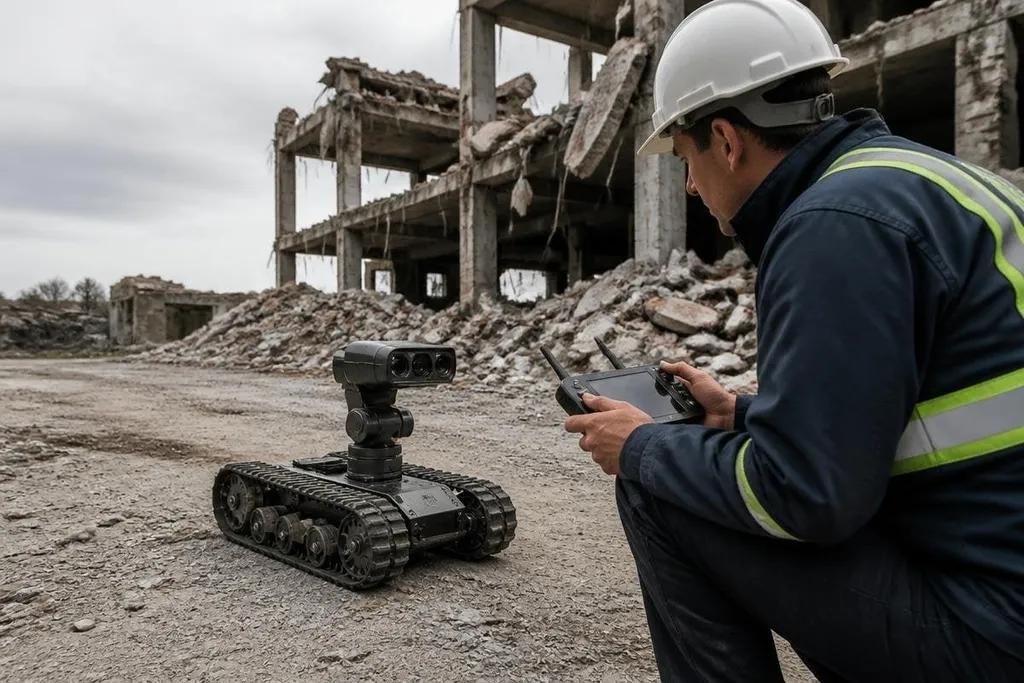
A disaster robot may need to enter a damaged building, carry a sensor, or send video from a place too risky for a person. The business opportunity sits in making that work repeatable, supportable, and worth paying for.
Quick read
- Buyers may pay for search, inspection, mapping, or supply delivery.
- Service contracts can matter as much as the robot itself.
- A machine that fails when links, power, or maps fail needs a clear backup plan.
What buyers are paying for
A rescue team rarely needs a robot as an object. It needs a task completed with less danger to its people. That task might be checking a structure, finding a route through debris, carrying a sensor, or sending live images from a damaged site.
Each task points to a different buyer and a different sales model. A fire service may need short-term access to a robot and a trained operator. An insurer may value building inspection after a flood. An infrastructure owner may want repeat checks after storms, earthquakes, or industrial accidents.
The machine is only one part of the offer. The buyer also needs transport, setup, operator training, spare parts, data handling, and a plan for recovery when the robot gets stuck.
That creates room for companies that sell a service rather than a robot. The price can follow the work completed, the hours on site, or the period of access. The right choice depends on who controls the budget and how often that buyer faces the task.
Four business paths
Hardware sales are the clearest path. A supplier builds a robot for a defined job and sells it with training, software, and replacement parts. This model suits teams with regular demand and staff who can keep the system ready.
Robot-as-a-service shifts the purchase toward access. A customer pays for a crew, a robot, or both during a response. That lowers the first payment, though the supplier carries more risk around travel, staffing, repairs, and idle time.
Inspection and mapping can support a data service. The robot gathers images, thermal readings, gas measurements, or 3D maps, while the customer pays for a report that helps them decide what to repair or close.
Maintenance is another opening. Disaster robots work around water, dust, broken concrete, poor lighting, and damaged networks. A service provider that can inspect, clean, repair, and return these machines to service may earn revenue after the initial sale.
Data is useful only when someone can act on it
A video feed has limited value if the team can't tell where it was recorded or what changed since the last inspection. A mapping system needs a location reference. A gas reading needs a clear alert rule and a person who can respond.
That makes software part of the business case, though the software still needs a defined job. It might sort images for an inspector, mark damaged areas on a map, or record which rooms a robot checked. Each feature should reduce a decision delay or remove a manual step.
The business case also needs evidence about who built the robot, where it ran, and what it did. Robot24.com robotics coverage can connect those details to a dated test, giving a buyer something firmer than a product claim.
The supplier should also state what happens to the collected data. Emergency images can show private homes, injured people, or sensitive sites. Storage, access, deletion, and handoff rules belong in the contract rather than in a later argument.
The limits shape the sale
Disaster sites change faster than a robot's map. Smoke can cut visibility. Water can damage electronics. Concrete can block a radio link.
A wheeled robot may lose contact with the ground, while a flying robot may face short battery life or strict operating rules.
These limits don't end the business case. They narrow the job the robot can promise. A company that sells a machine for one defined inspection task has a clearer path than one that claims the robot can handle any emergency.
The buyer also needs a recovery plan. Who reaches the robot when it stops? Can a person carry it? Does the system keep data after a lost connection? A service contract that ignores those points leaves the hardest part outside the sale.
I'd avoid buying a disaster robot until the supplier can show the full task, including setup, failure, recovery, and reporting.
A practical buying checklist
Use these points before choosing a supplier or building a new service:
- Name the task: Write the exact action the robot must complete and the person who uses the result.
- Set the site limits: Record water, dust, heat, stairs, debris, lighting, and network conditions.
- Check the handoff: Decide how video, maps, readings, and reports reach the team that makes the next decision.
- Price the full service: Include operators, transport, training, repairs, storage, and spare parts.
- Plan for failure: Set rules for lost links, low power, blocked routes, damaged sensors, and robot recovery.
- Test the contract: State who owns the data, who accepts the risk, and what happens when the task remains incomplete.
The strongest business may sit beside the robot: trained crews, repair work, inspection reports, or software that turns raw data into a repair order. The next useful question is specific: which disaster task can a buyer fund often enough to keep the service ready?